RC Cars
TA07R Speed Run Custom
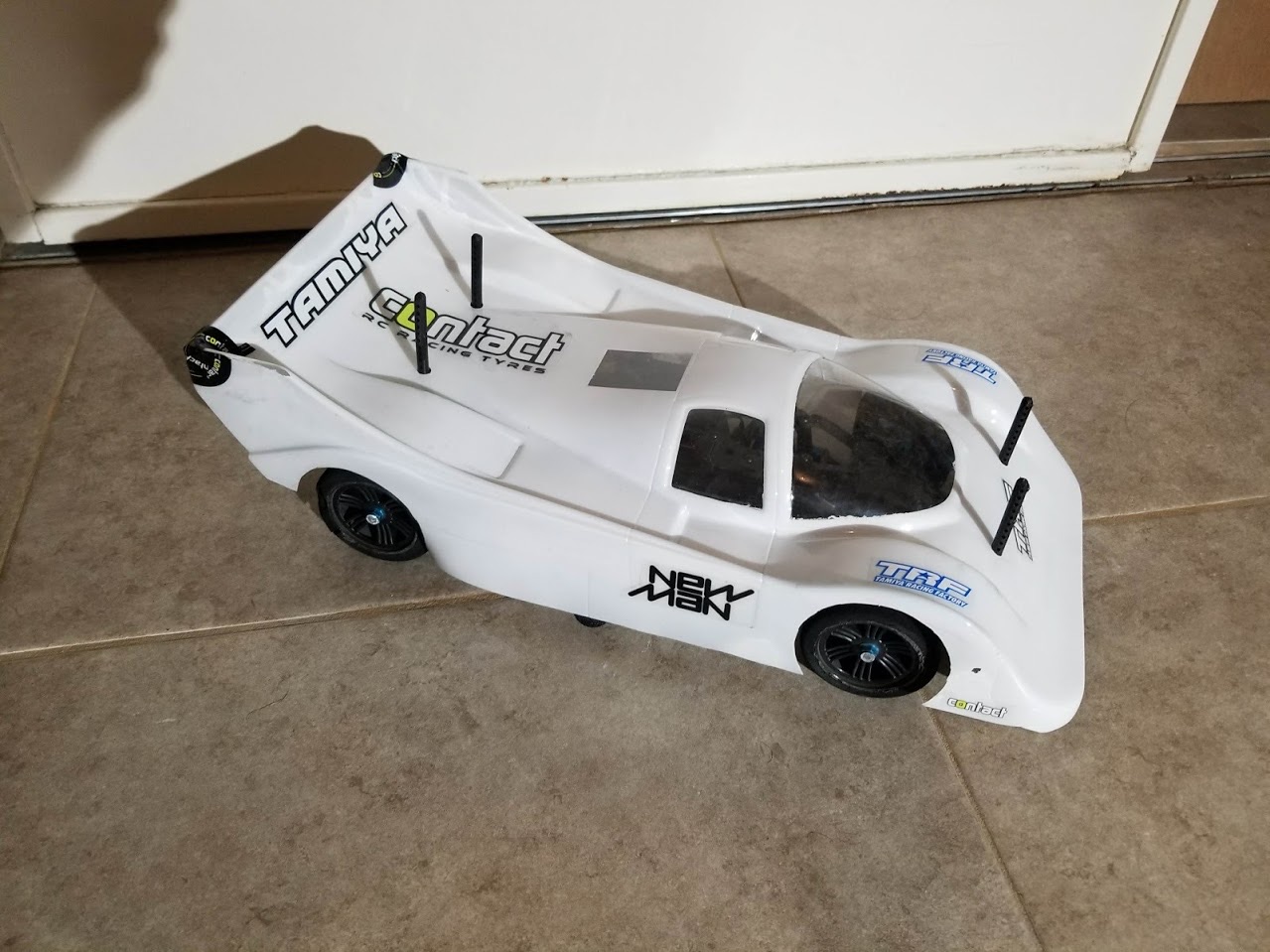
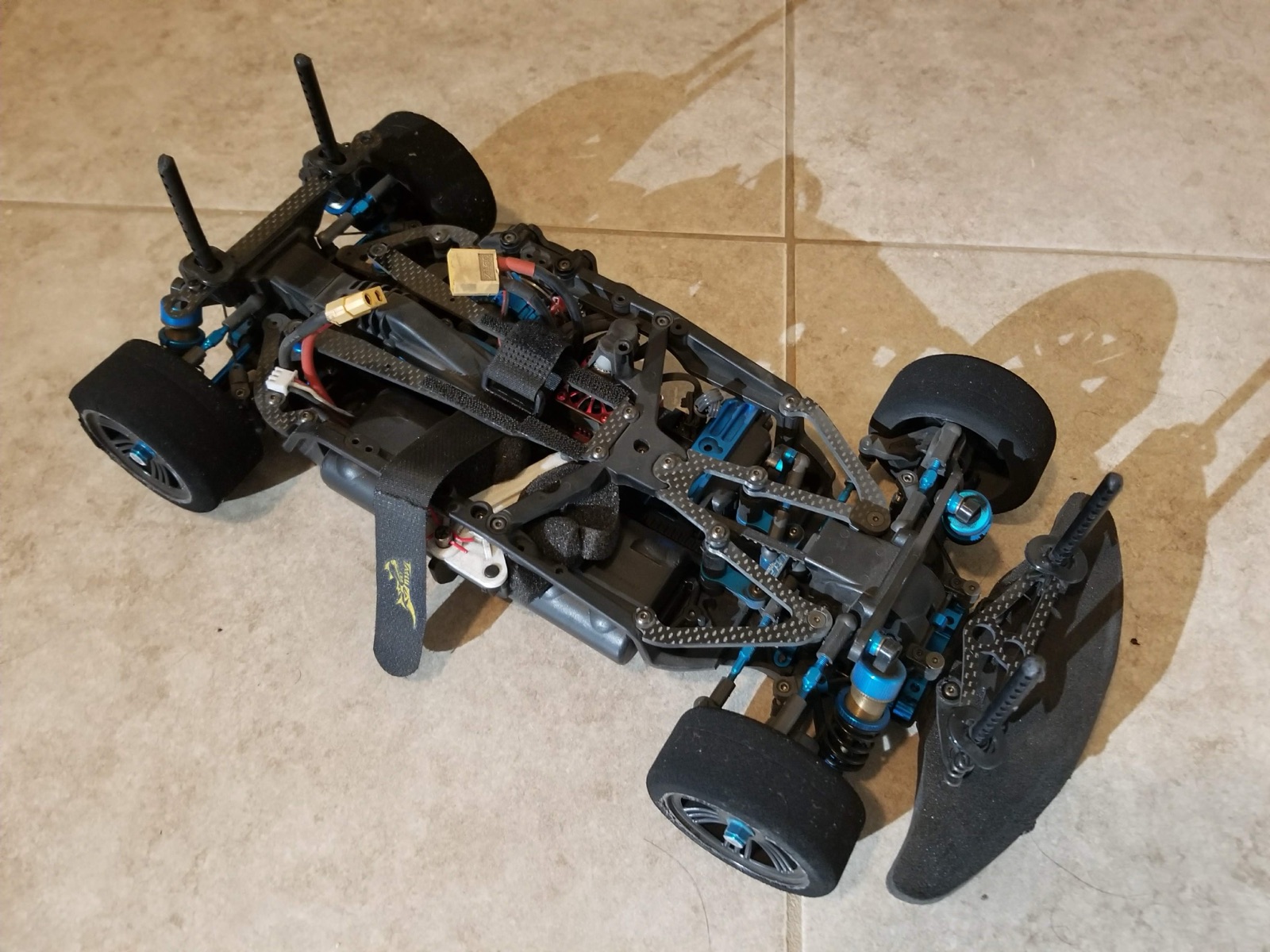
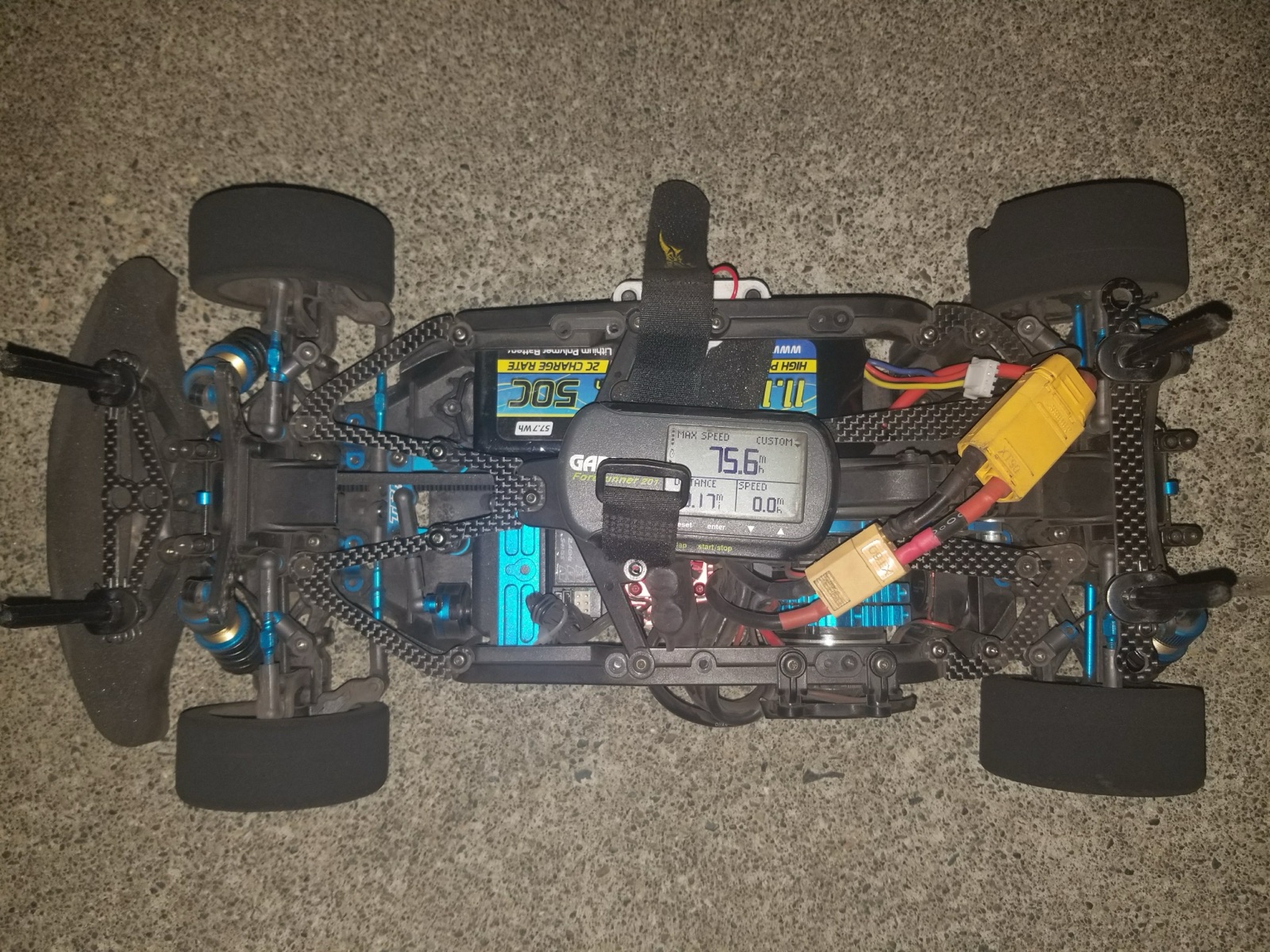
This build started as a challenge to make my 1/10-scale RC car go even faster. Before I modified the car at all, it reached 75.6 mph, in front of UC Berkeley's Campanile. That wasn't enough: I wanted to hit triple digits, so I set out to build a custom speed-run car. Higher speeds should already be possible in that configuration on smoother, longer roads.
Chassis plate
One of the first things I did was design a custom chassis plate. Getting the hole positions right on the first try felt great.
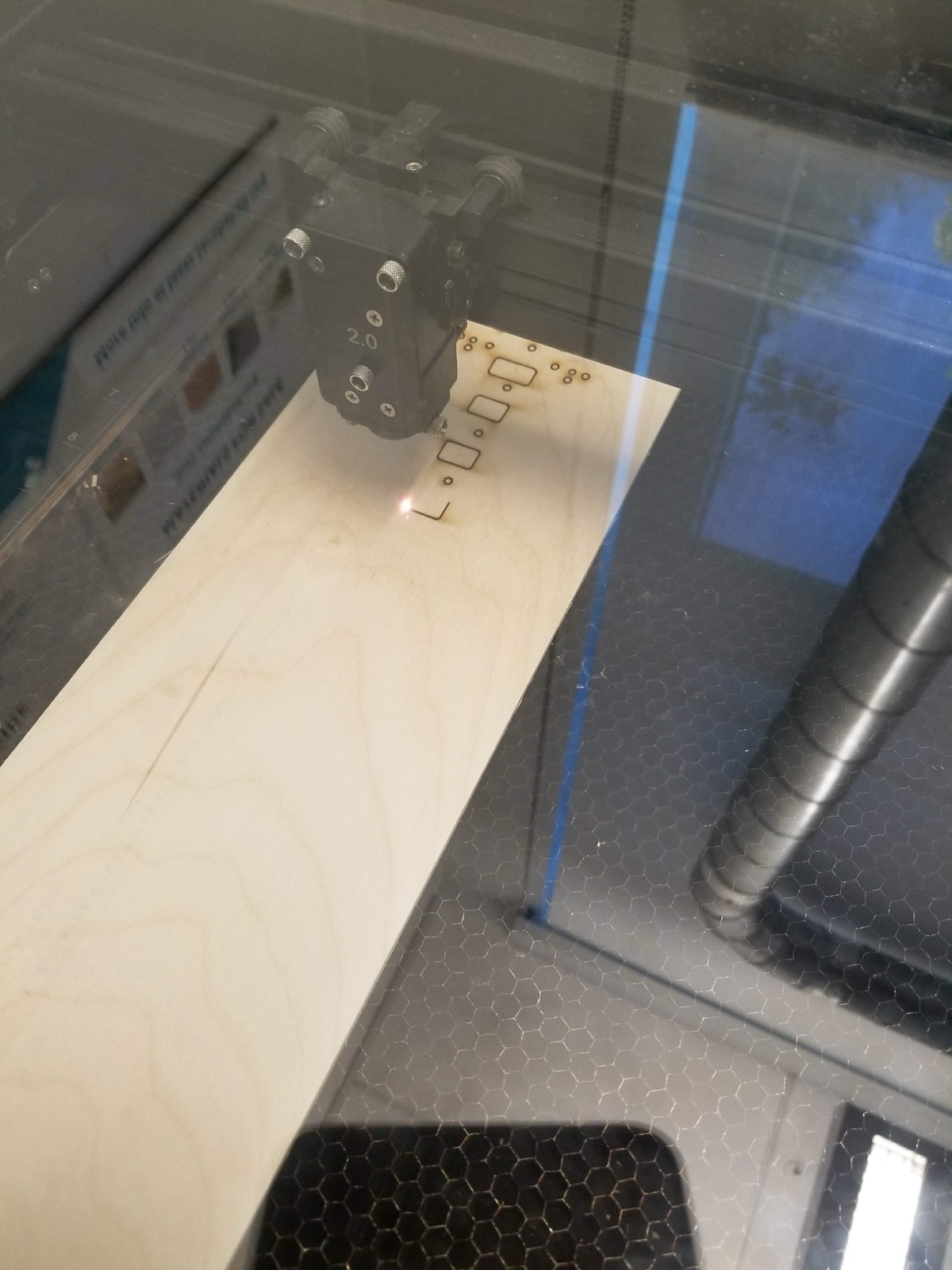
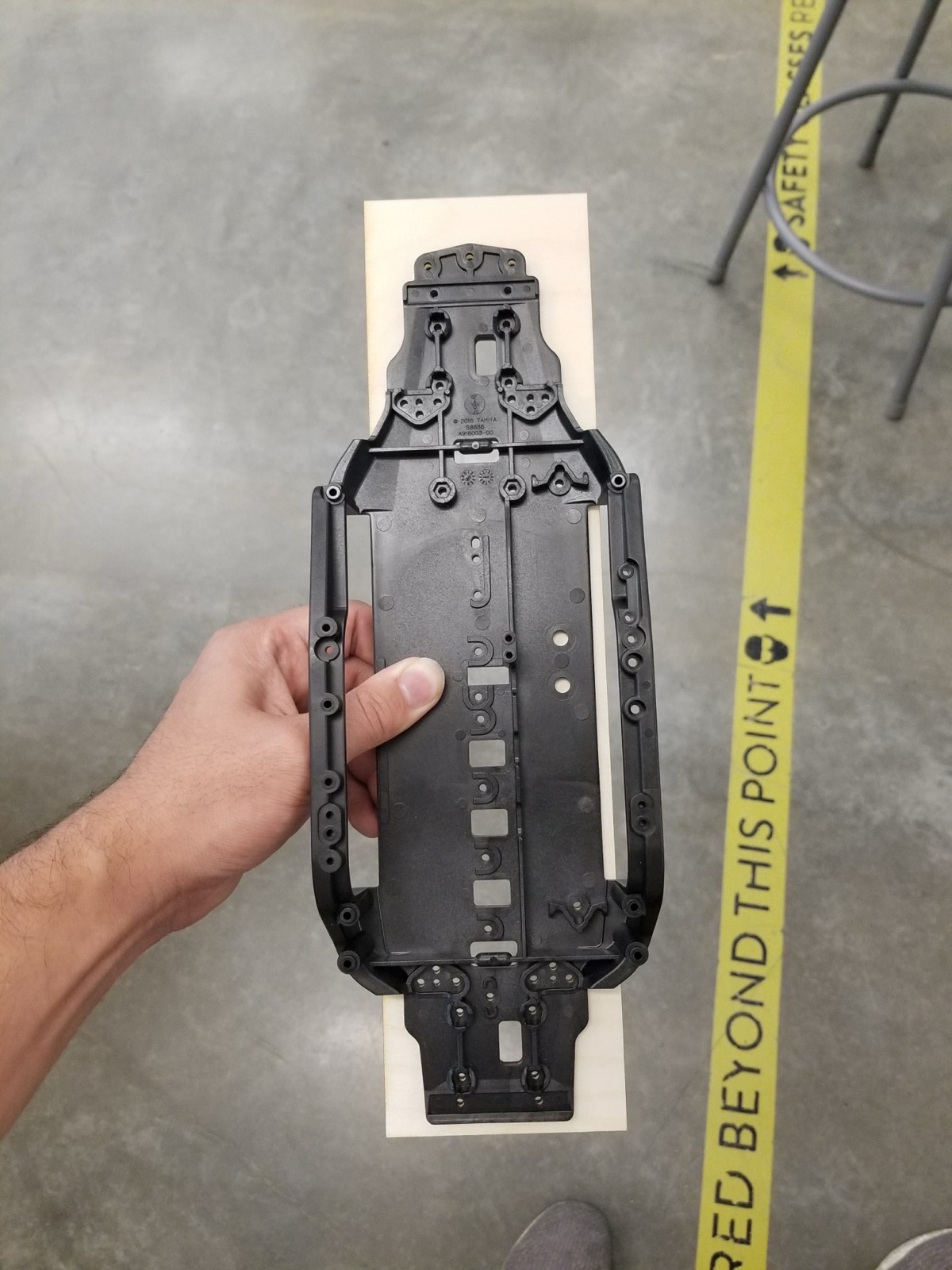
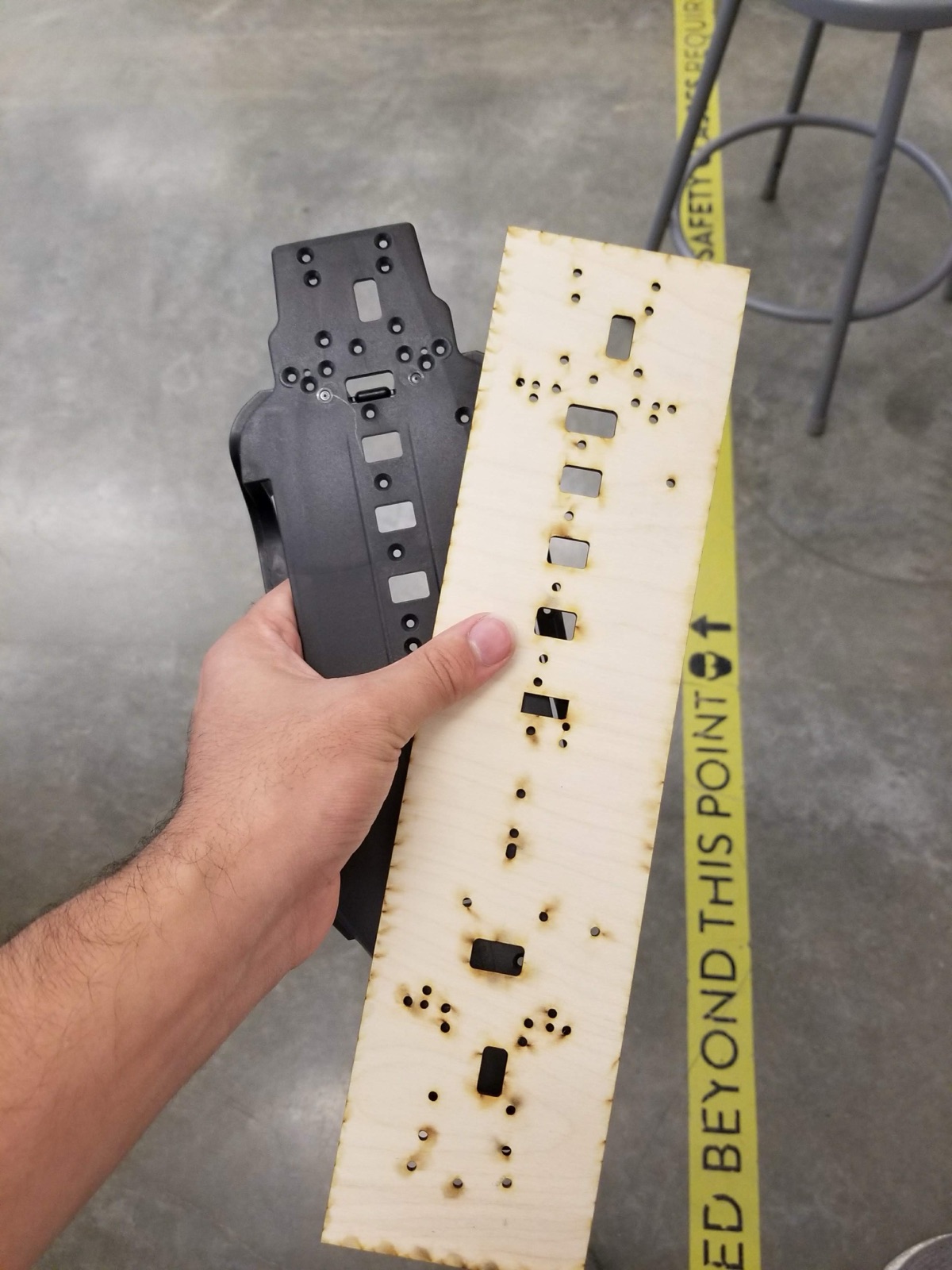
The few aftermarket chassis made for the TA07 simply replace the stock Tamiya tub. None of them have enough area to mount several batteries or to smooth out the car's underside for better aerodynamics. Because the TA07 is belt-driven, it is more forgiving of the spacing between the front and rear bulkheads than a car with a propeller shaft. After many revisions, I had a working chassis plate. To save money, I laser-cut the first prototypes from wood.
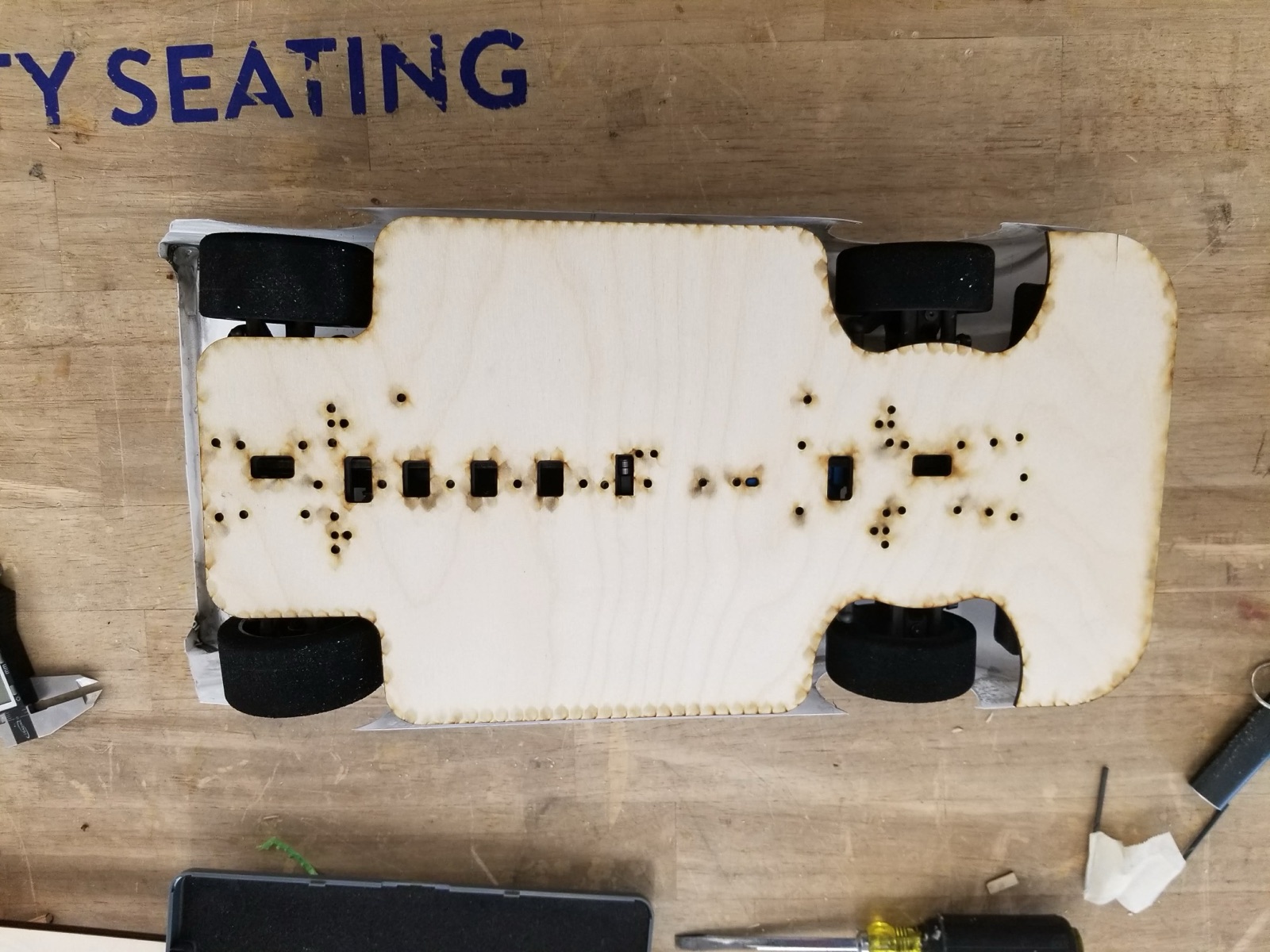
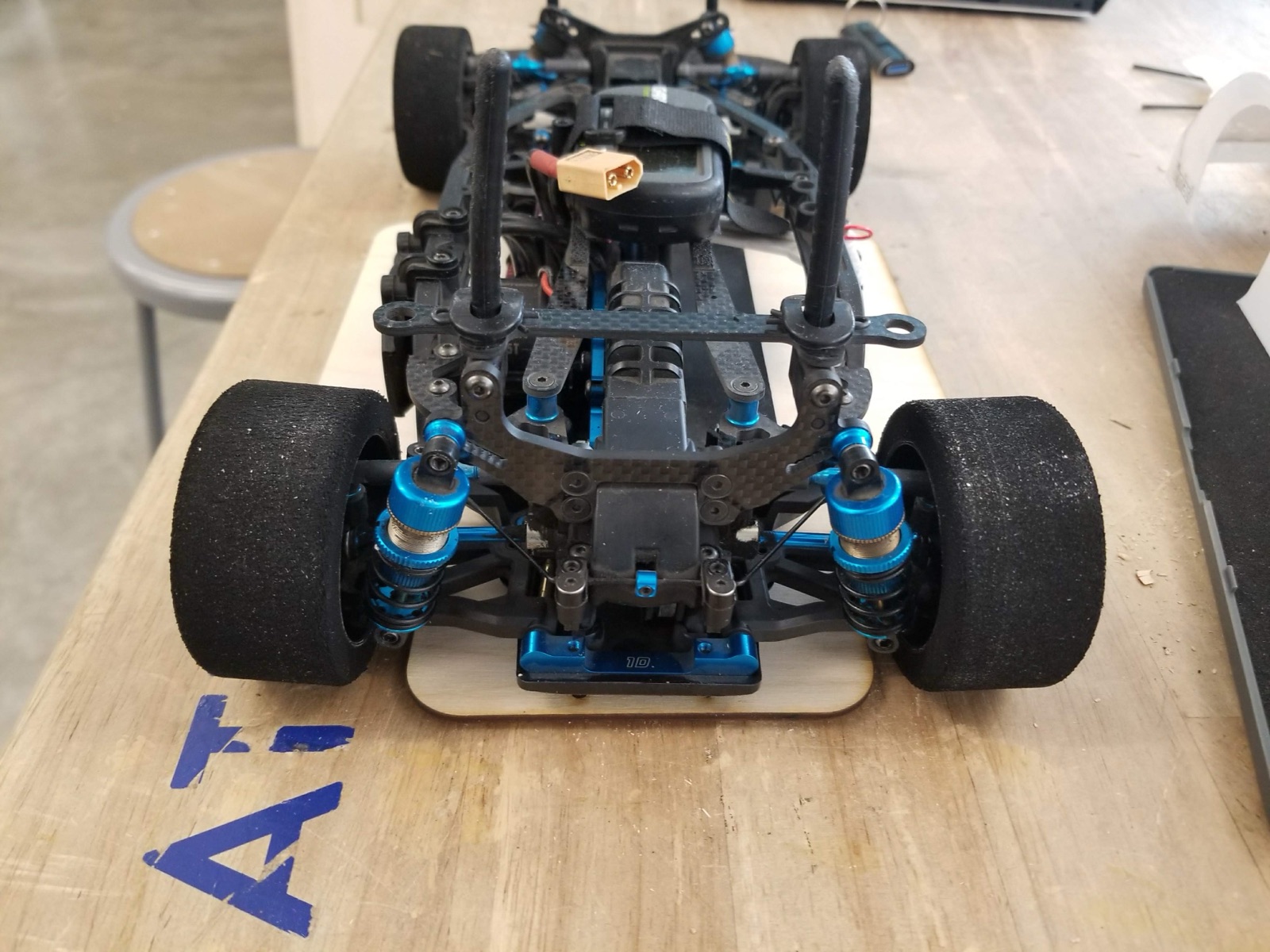
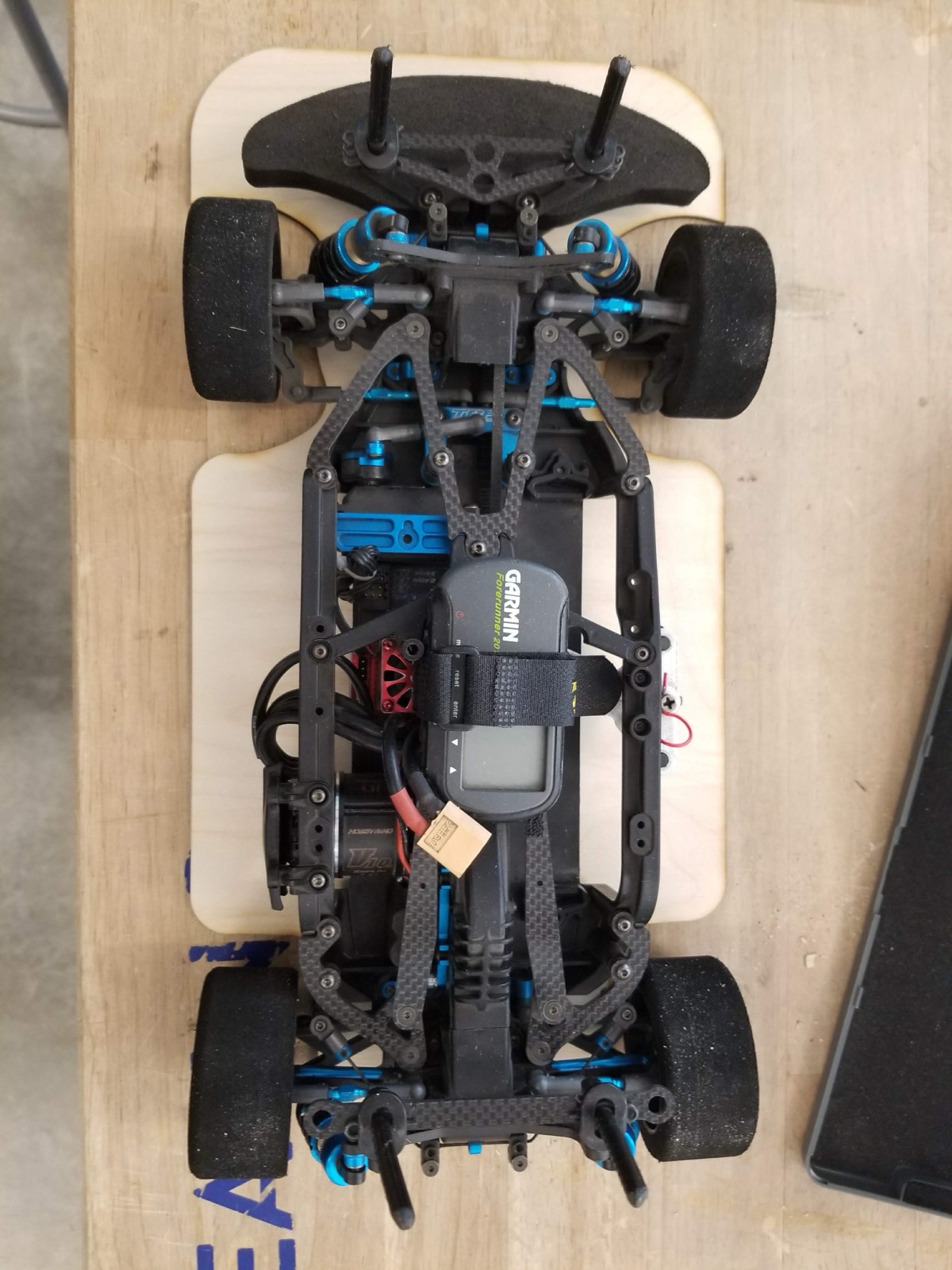
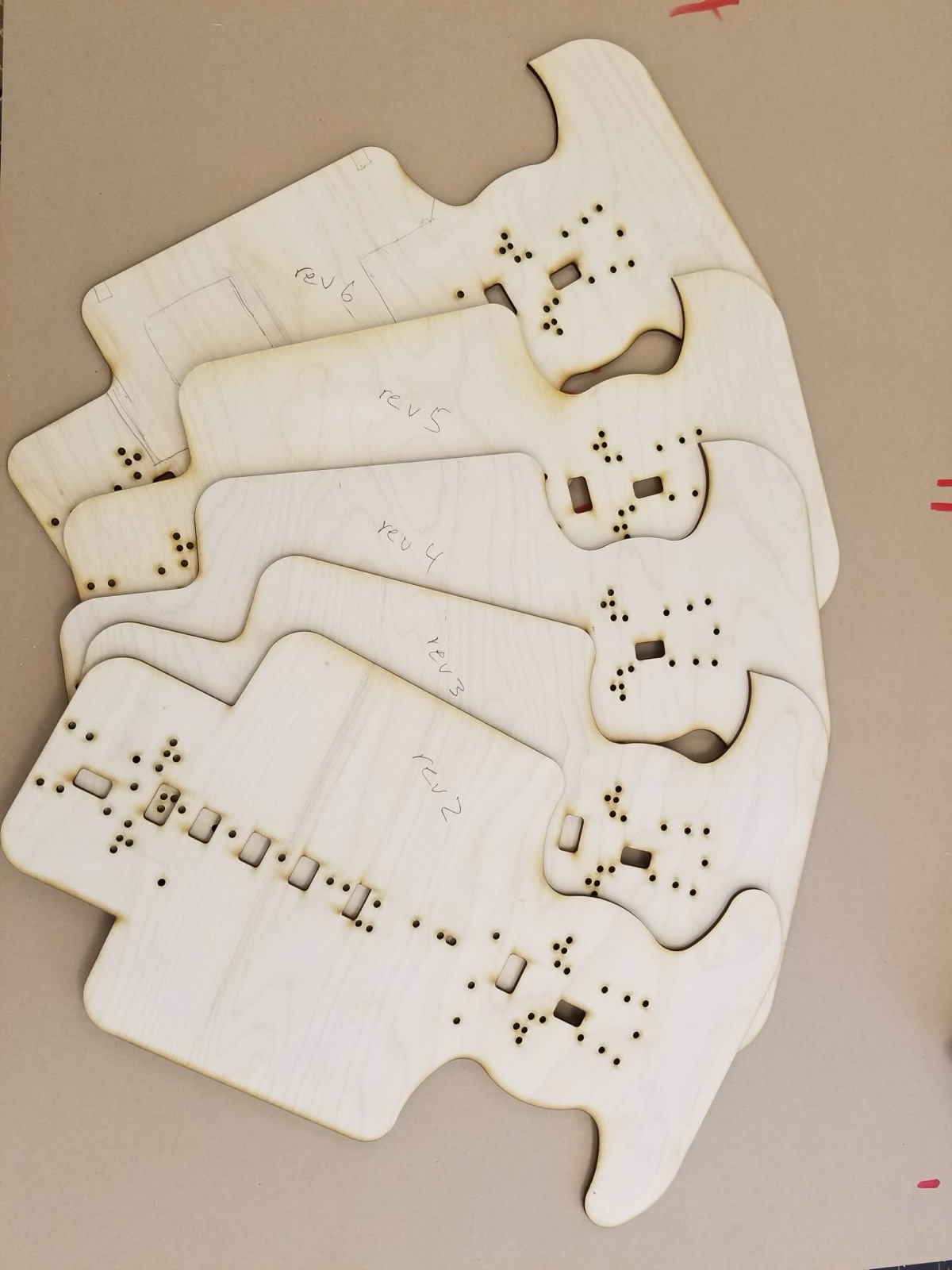
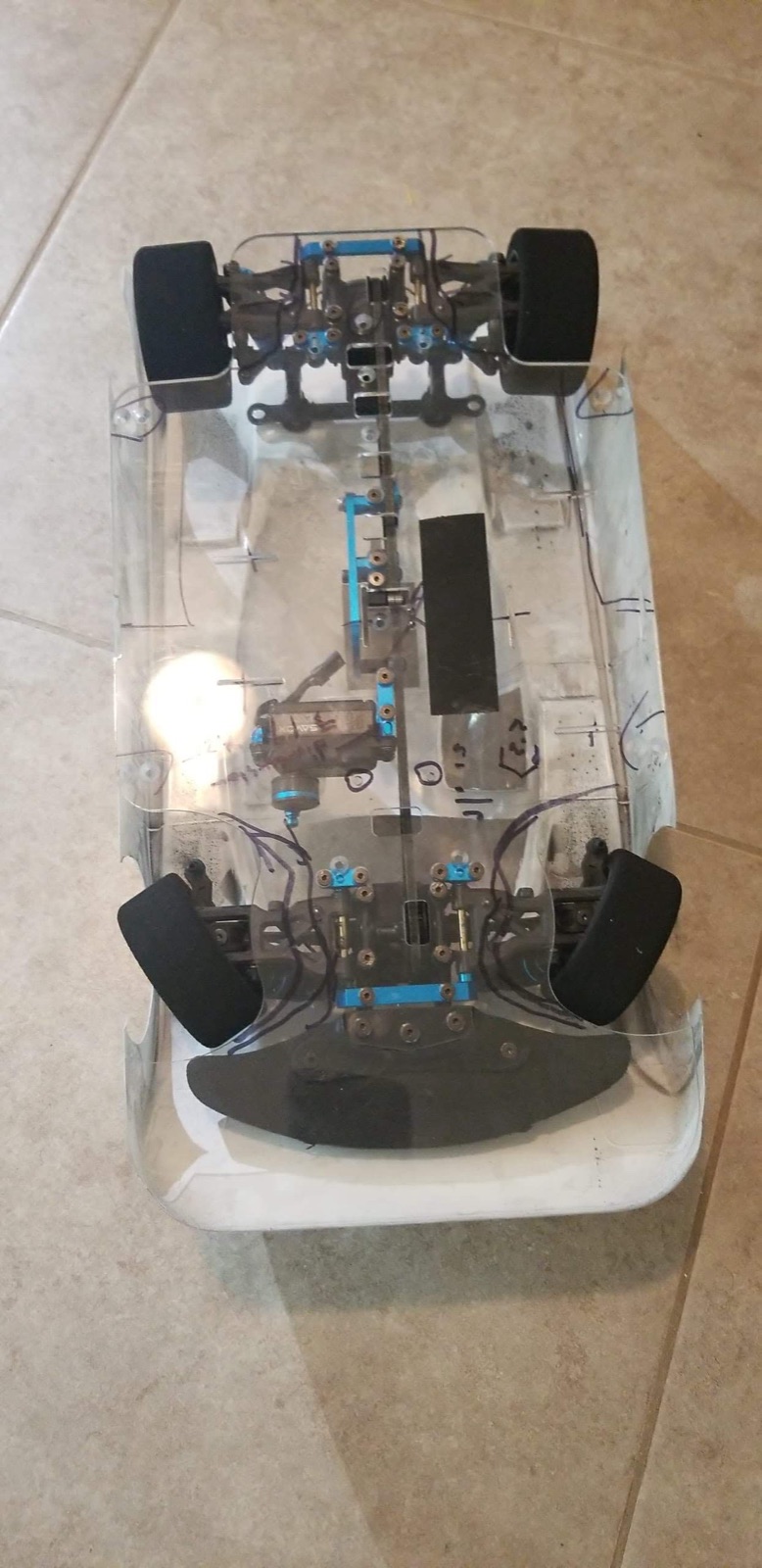
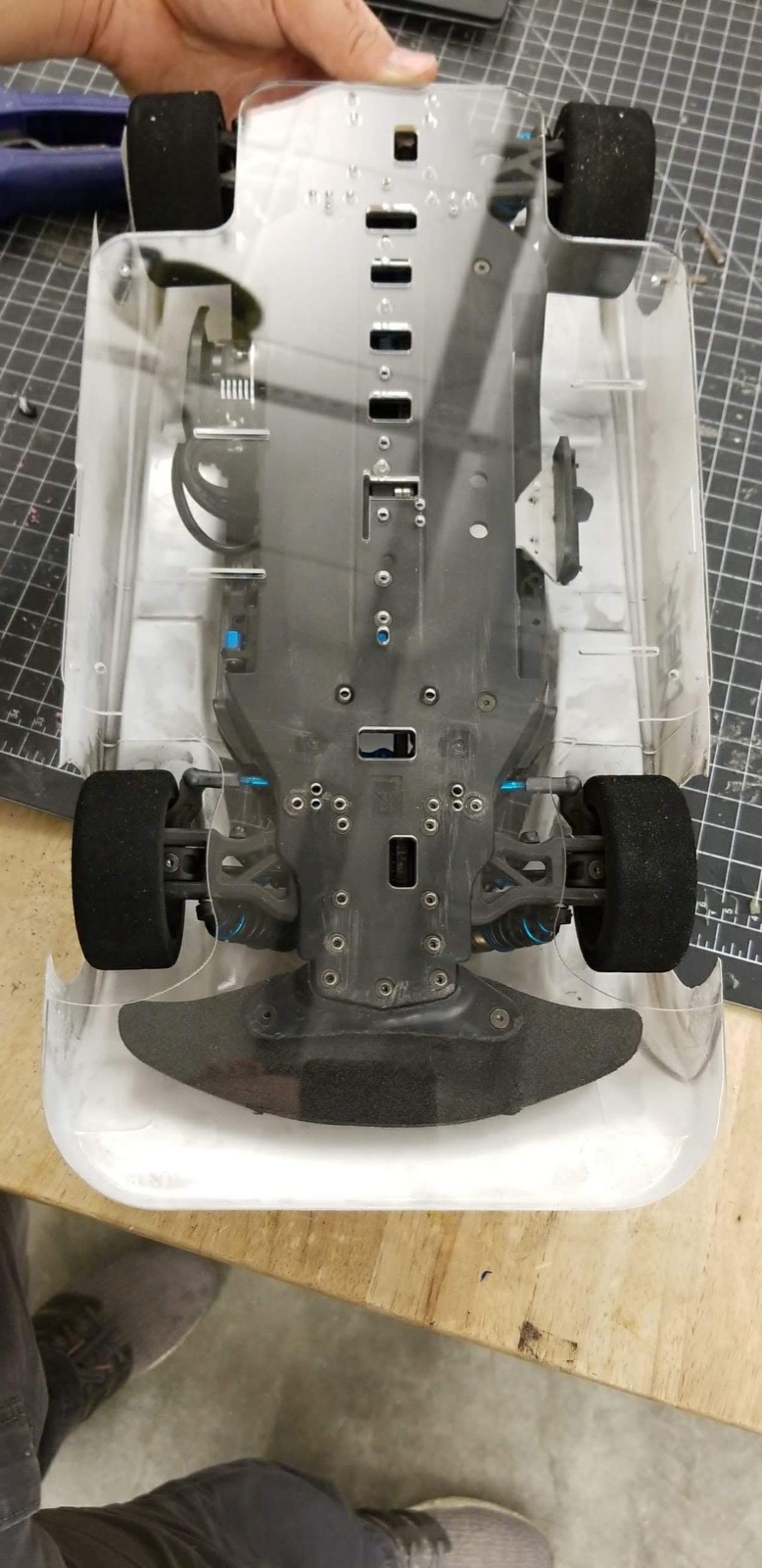
Later prototypes were acrylic, which made clearance problems easy to spot. This was also the first time I mounted some of the car's hardware to the chassis.
Motor plate
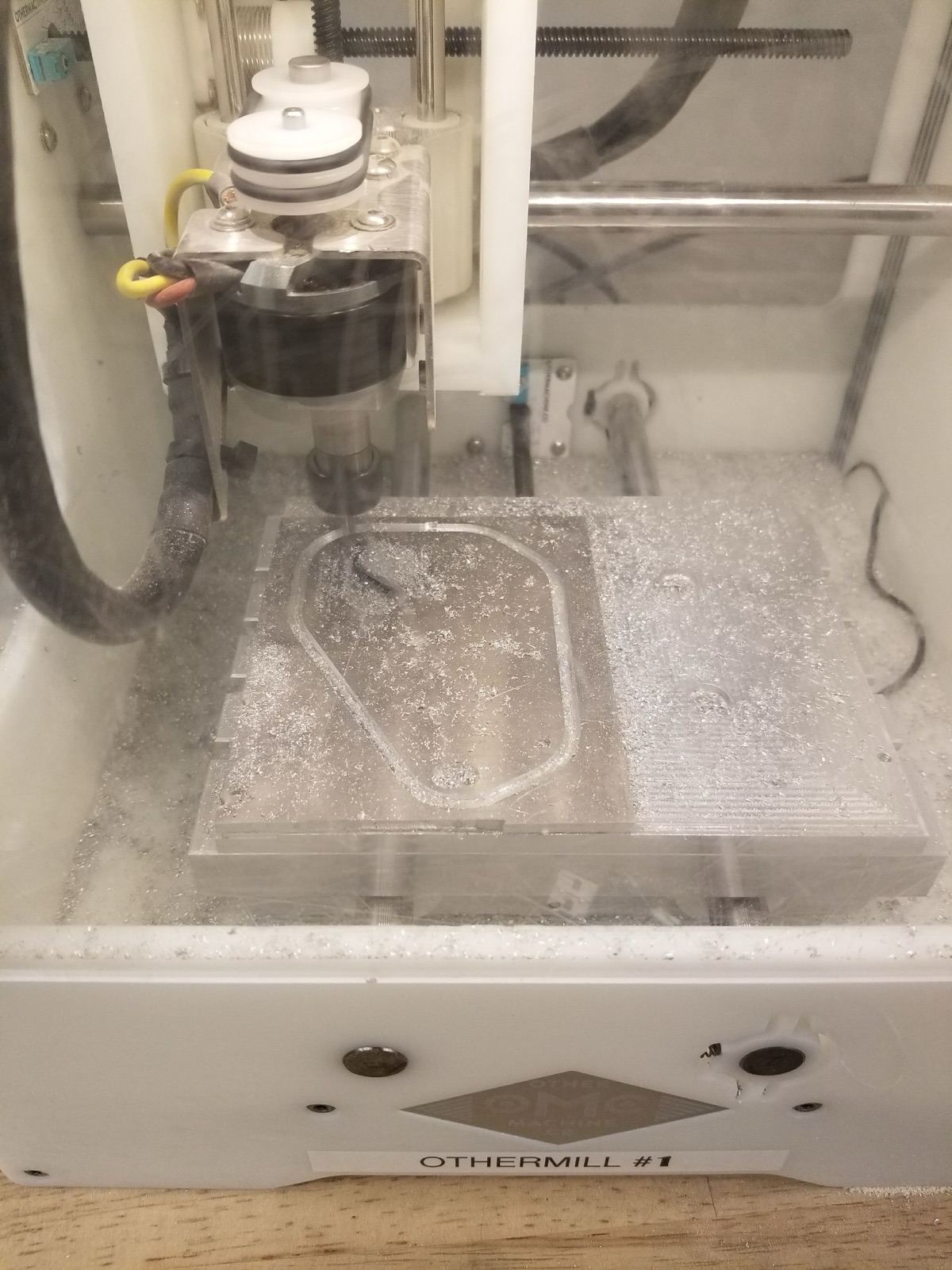
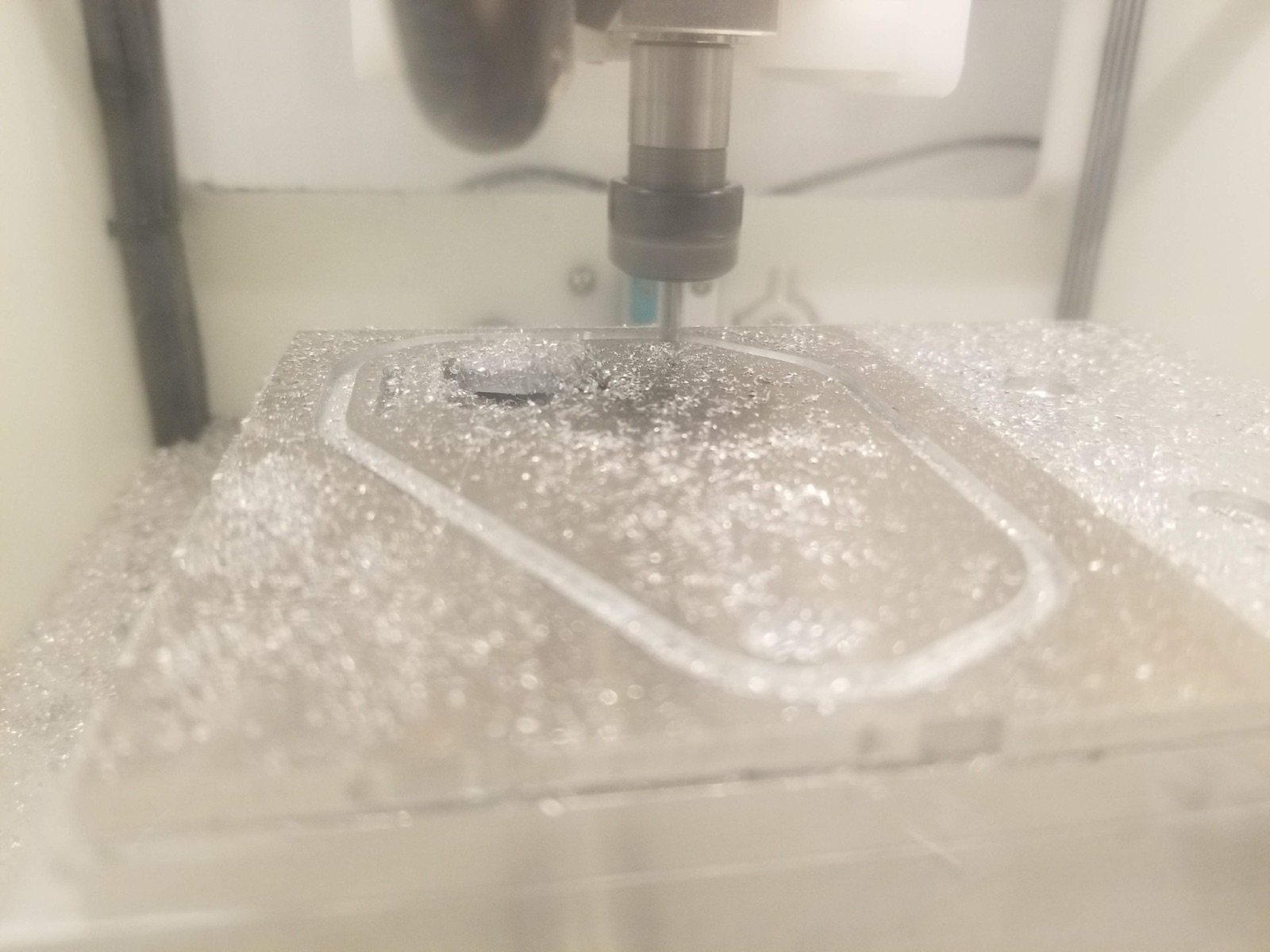
Next, I designed a motor plate to hold the motor, several pulleys and the belt tensioners, and cut it on an Othermill desktop CNC.
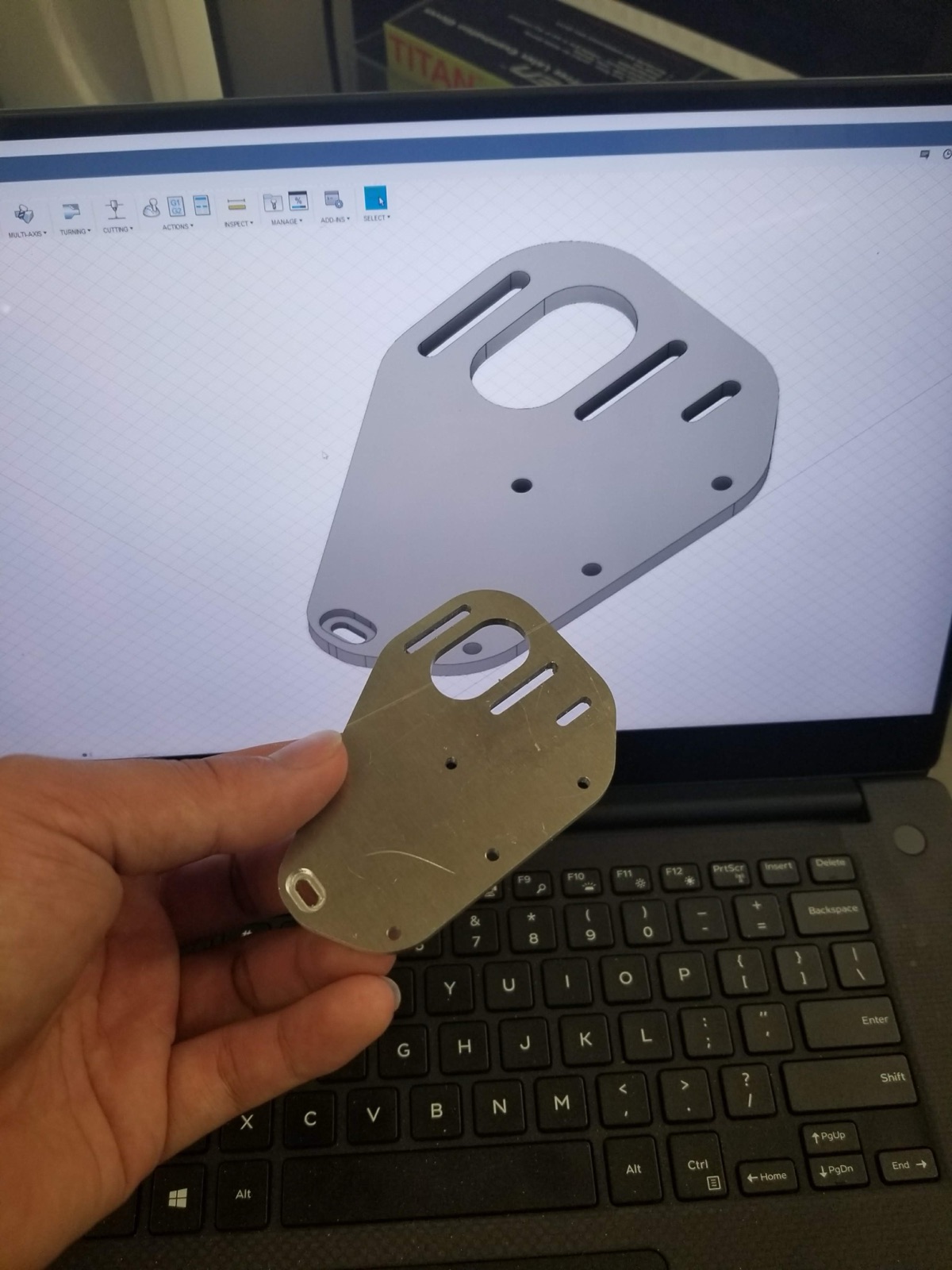
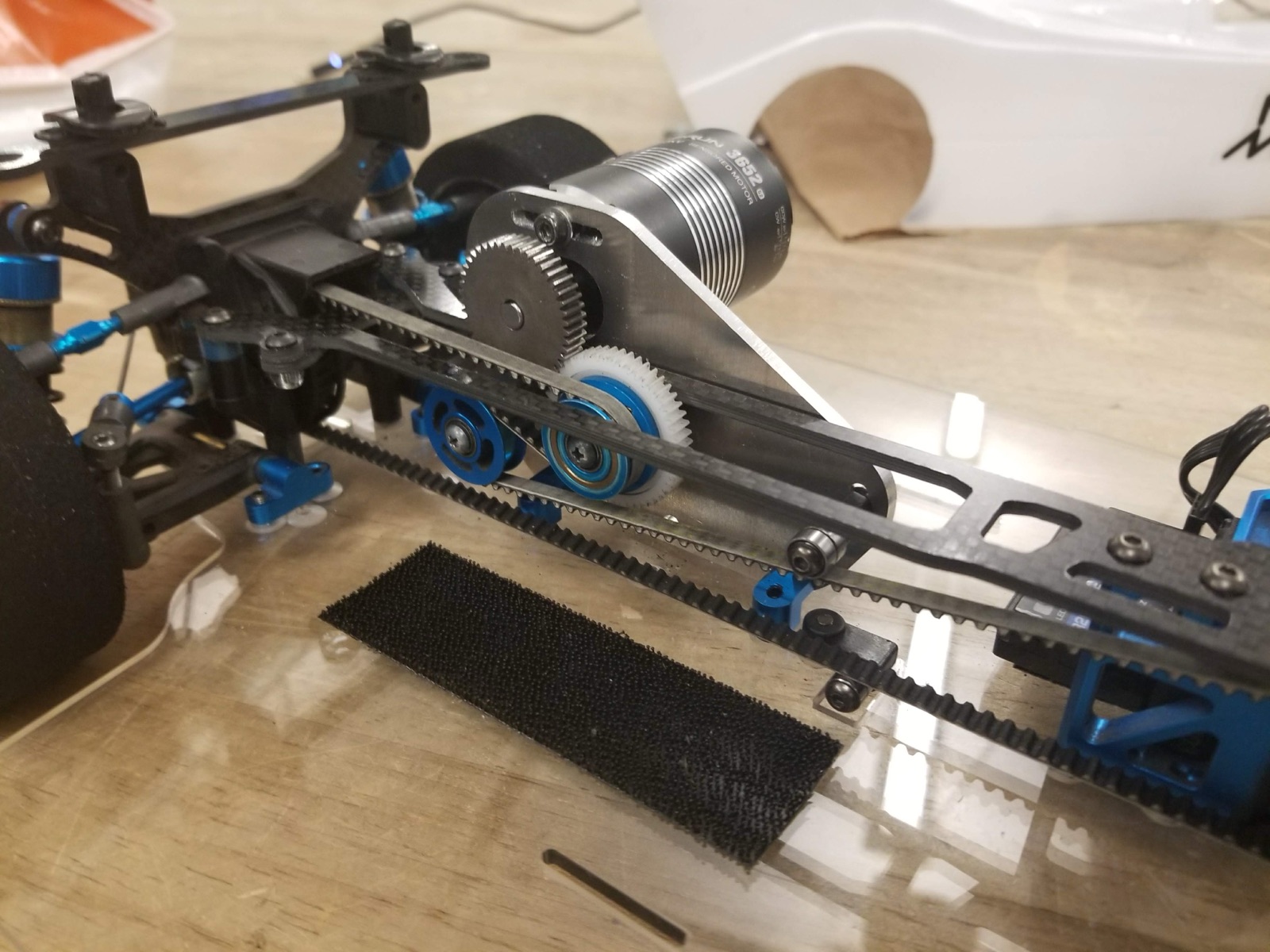
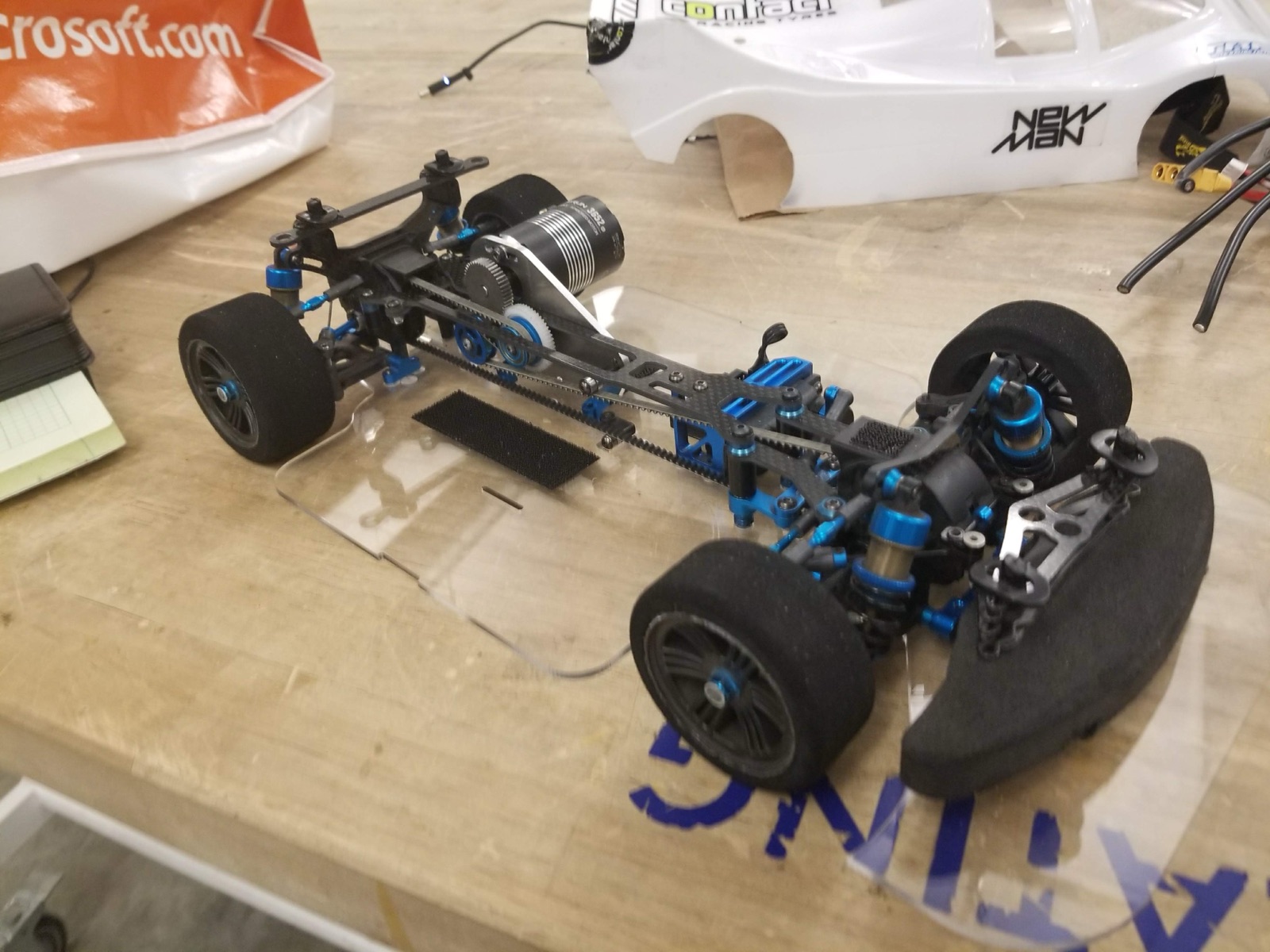
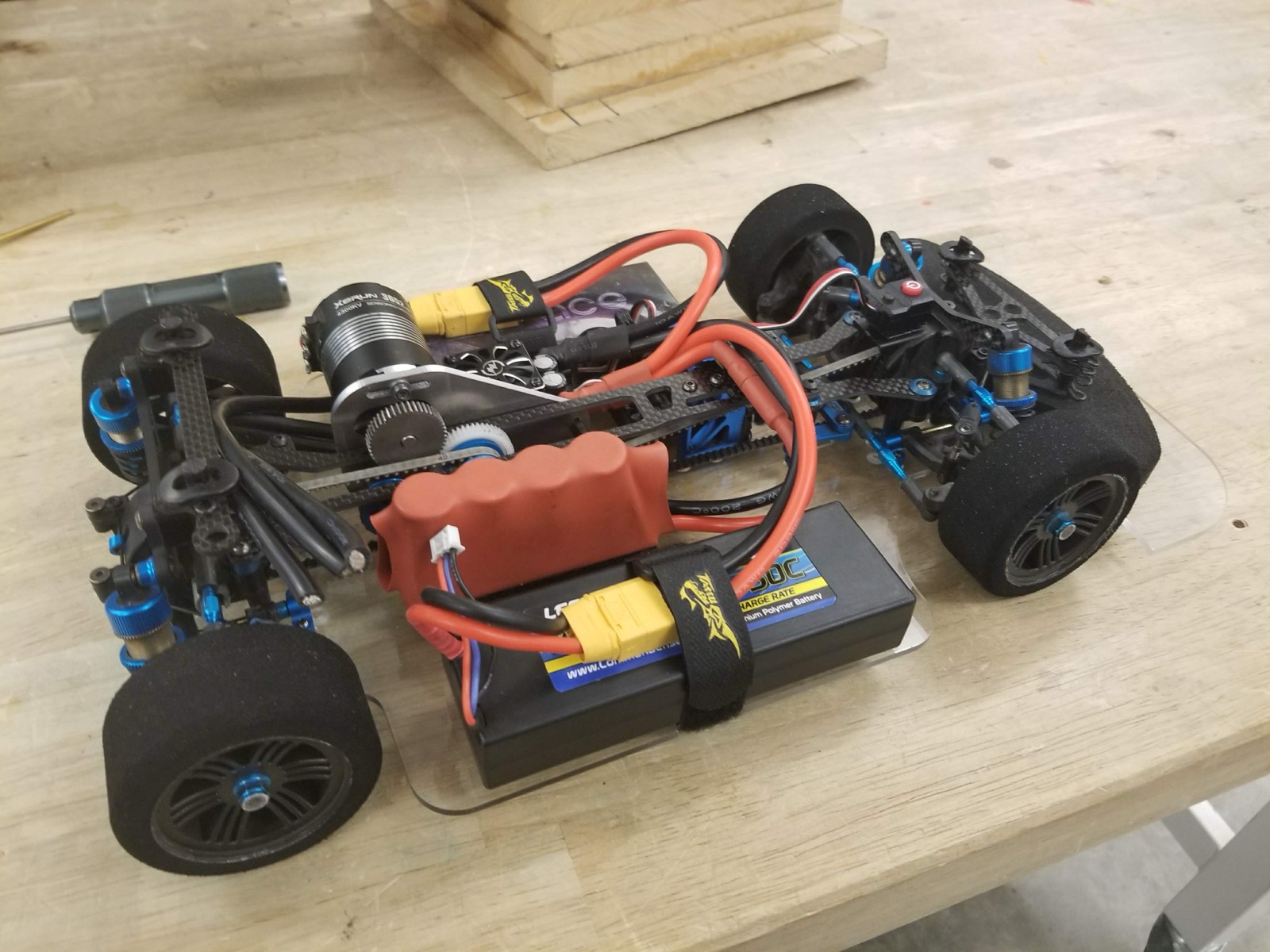
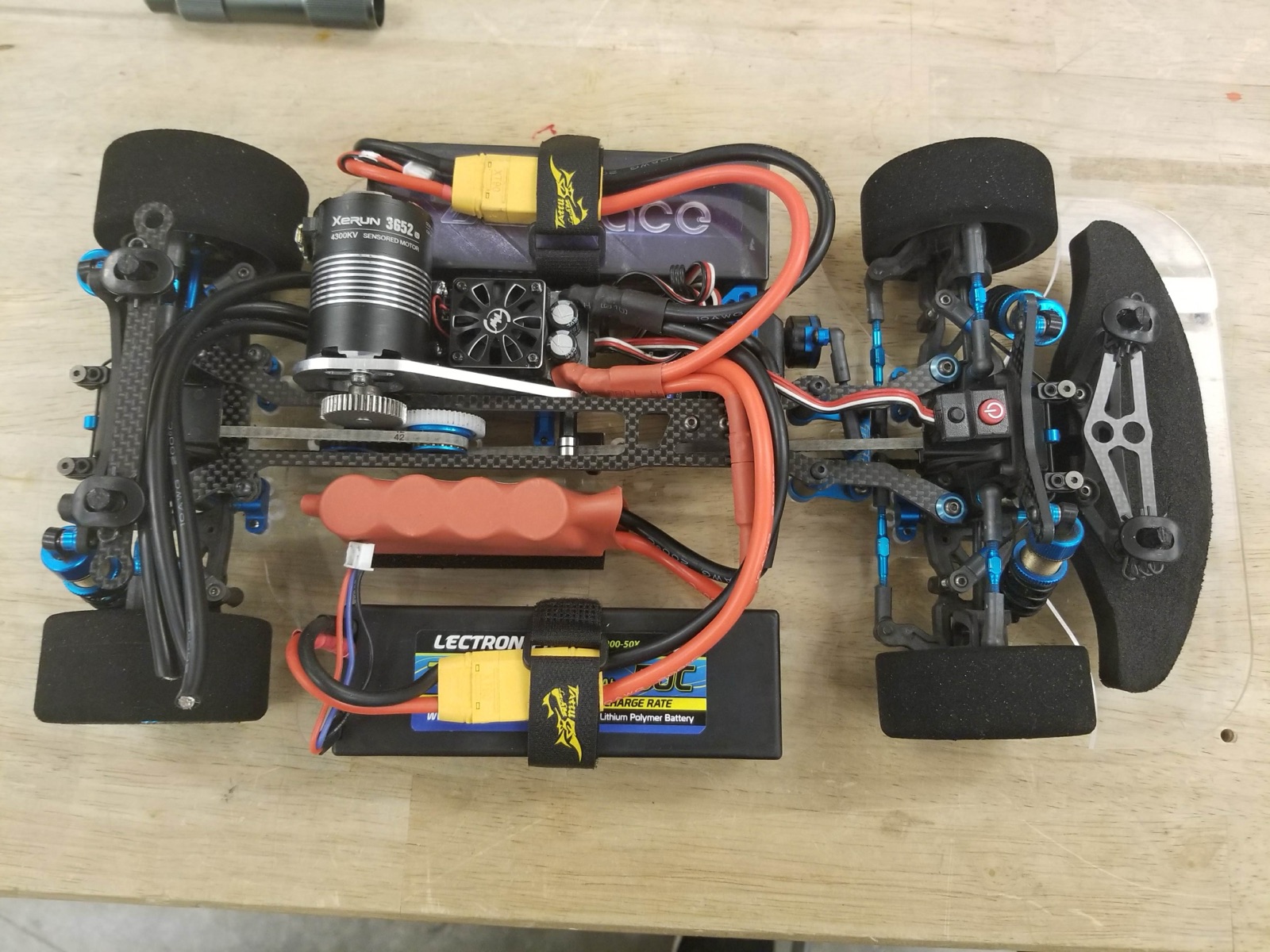
With the motor plate done, I could test the custom TA07 for the first time. The electronics fit in a layout that left room for larger battery packs on either side, for the best weight distribution.
Motor speed tests
2S (7.4 V) packs in parallel, measured with a tachometer.
3S (11.1 V) packs in parallel, measured with a tachometer.
Cutting the final chassis
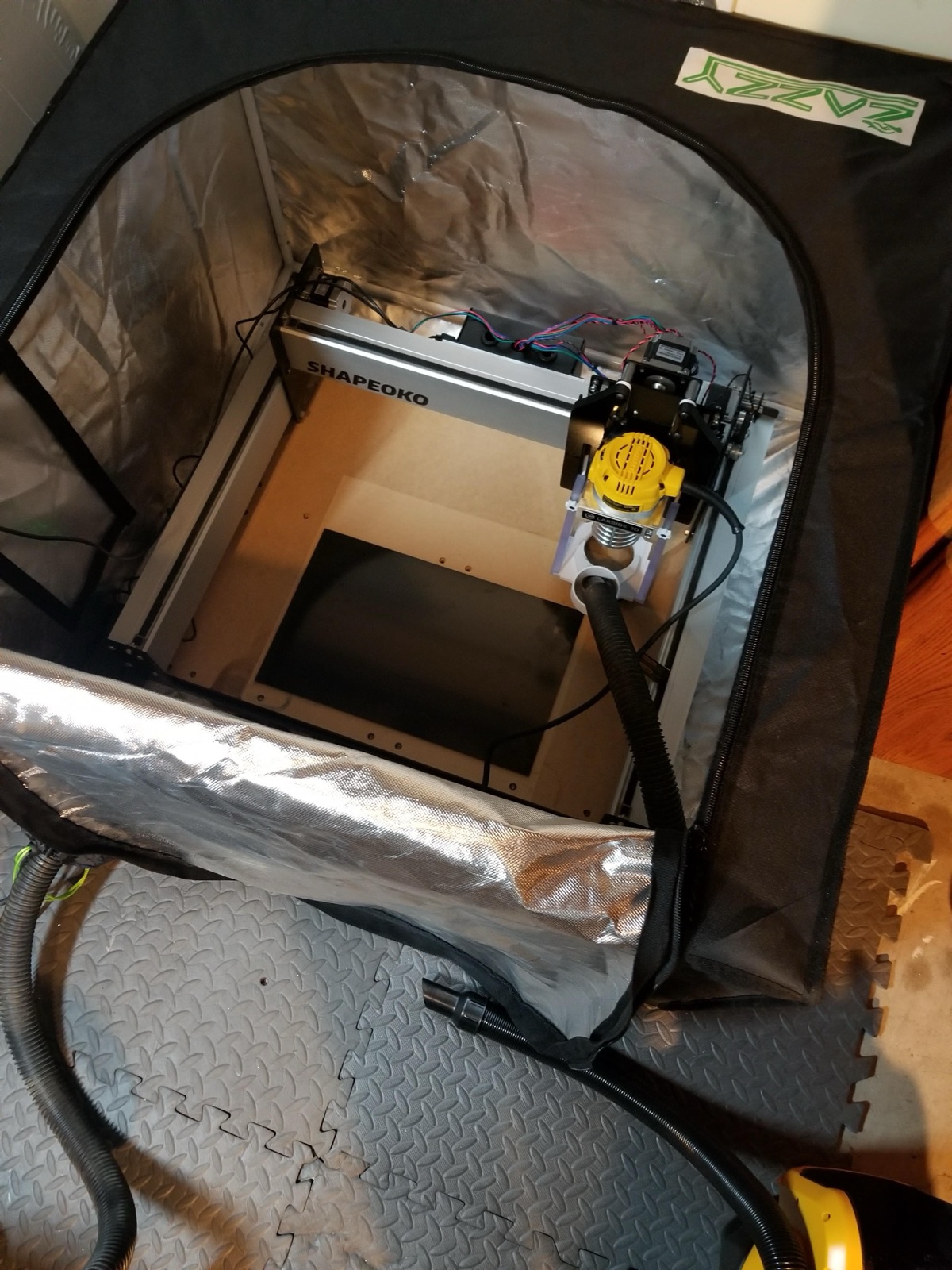
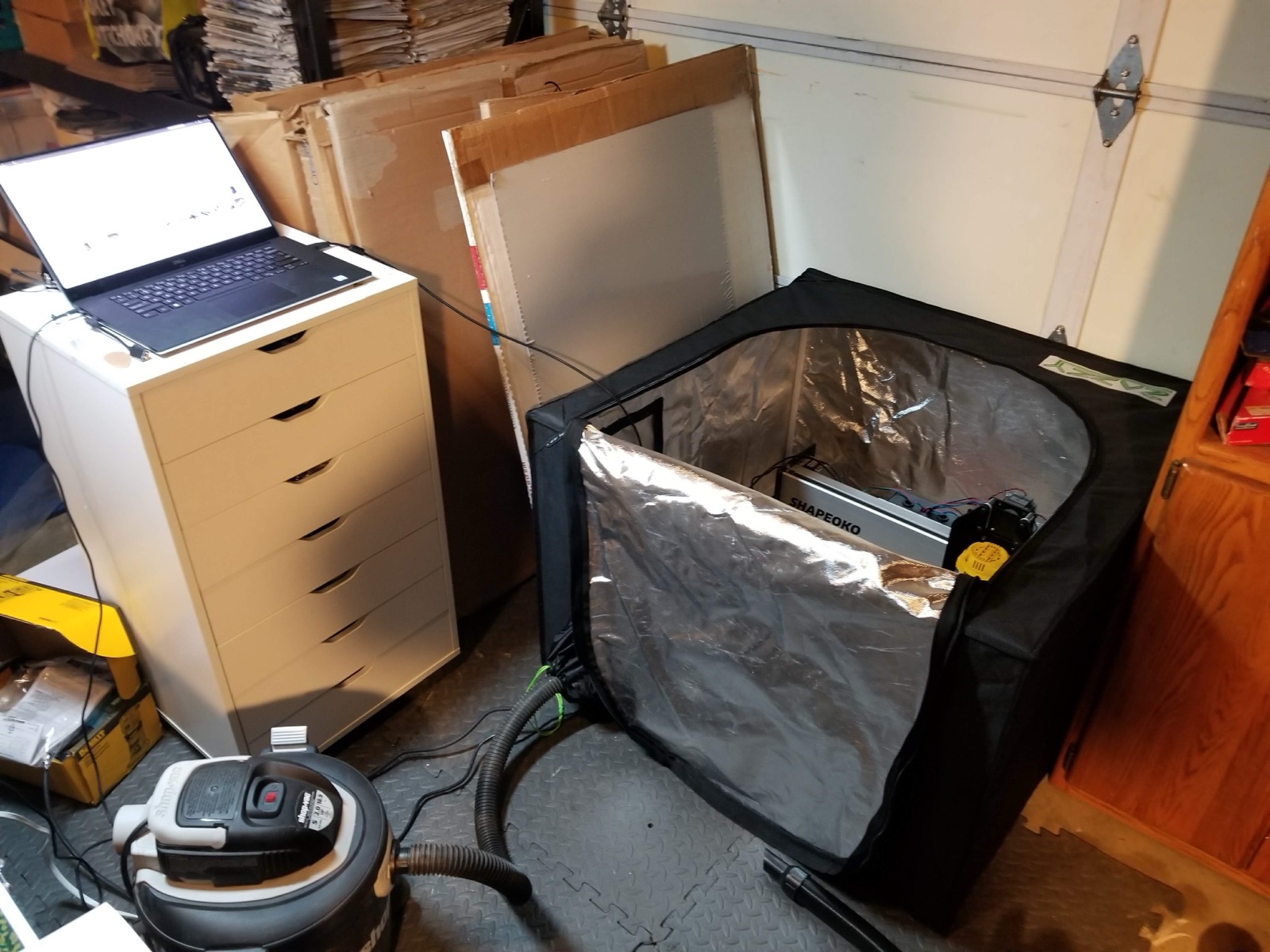
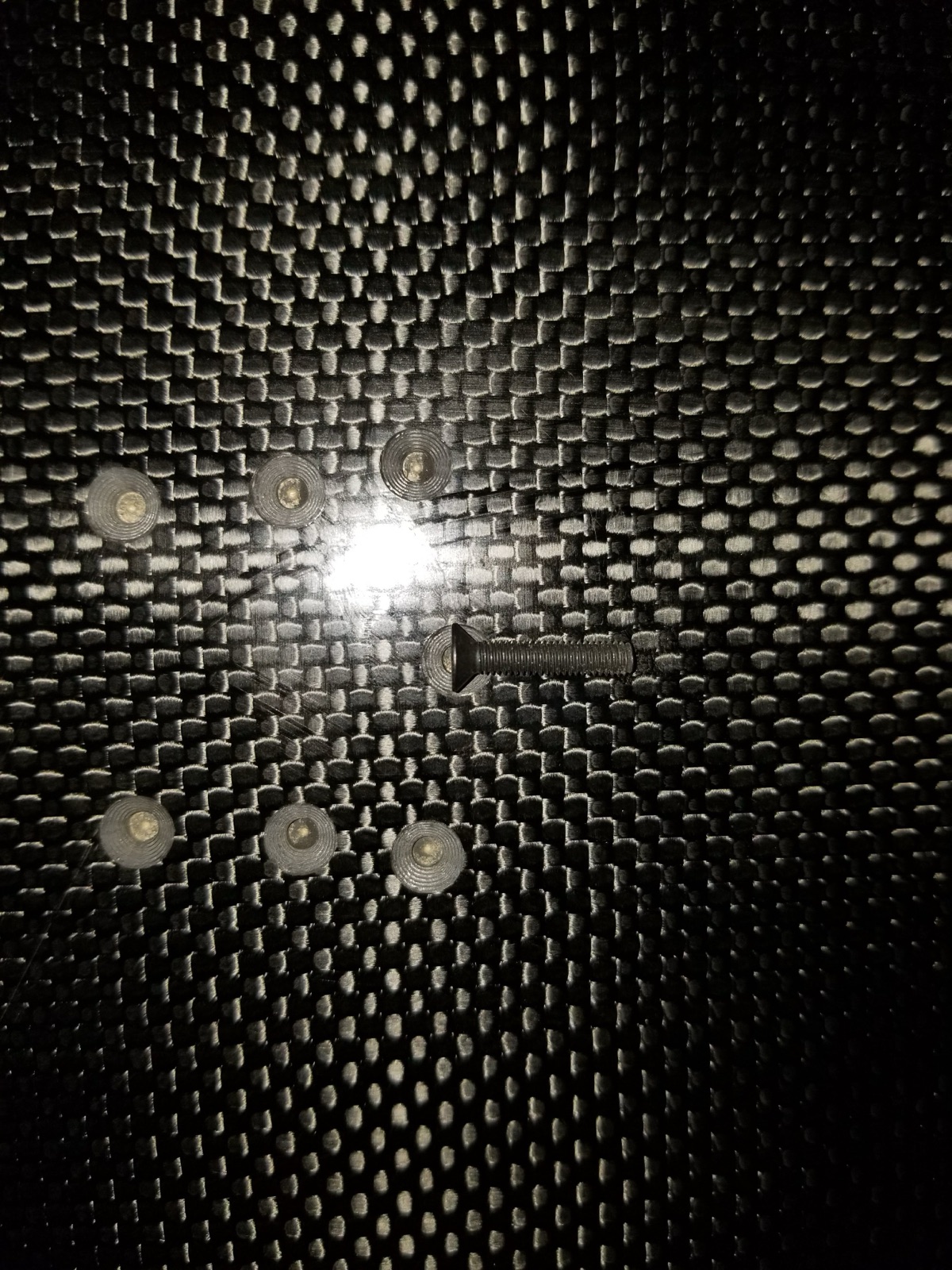
This is the setup I used to cut the TA07 chassis: a Shapeoko 3 running several toolpaths with different cutting bits.
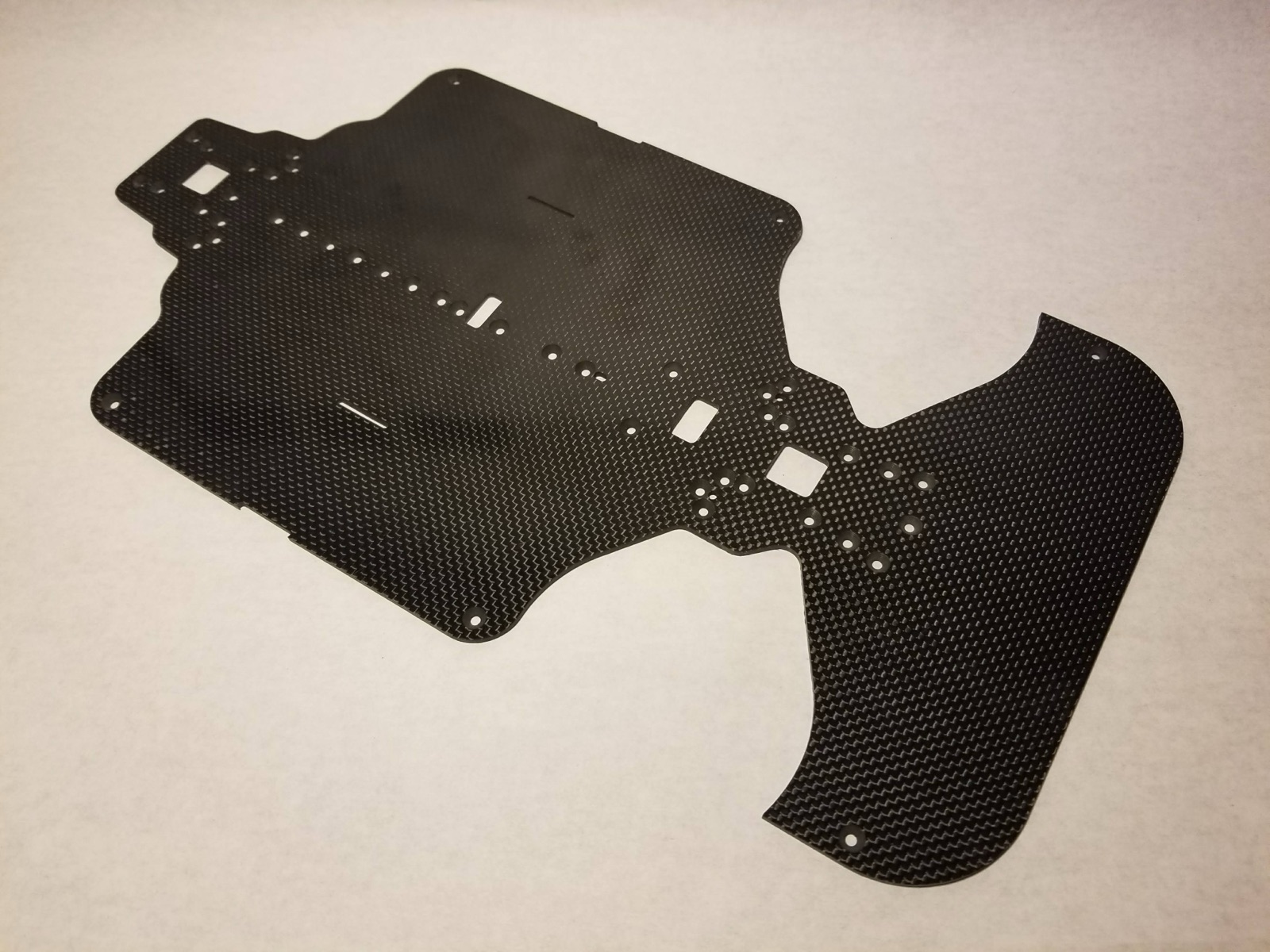
The final product. I combined it with a PSM carbon fiber upper deck and steering posts to assemble the finished car.
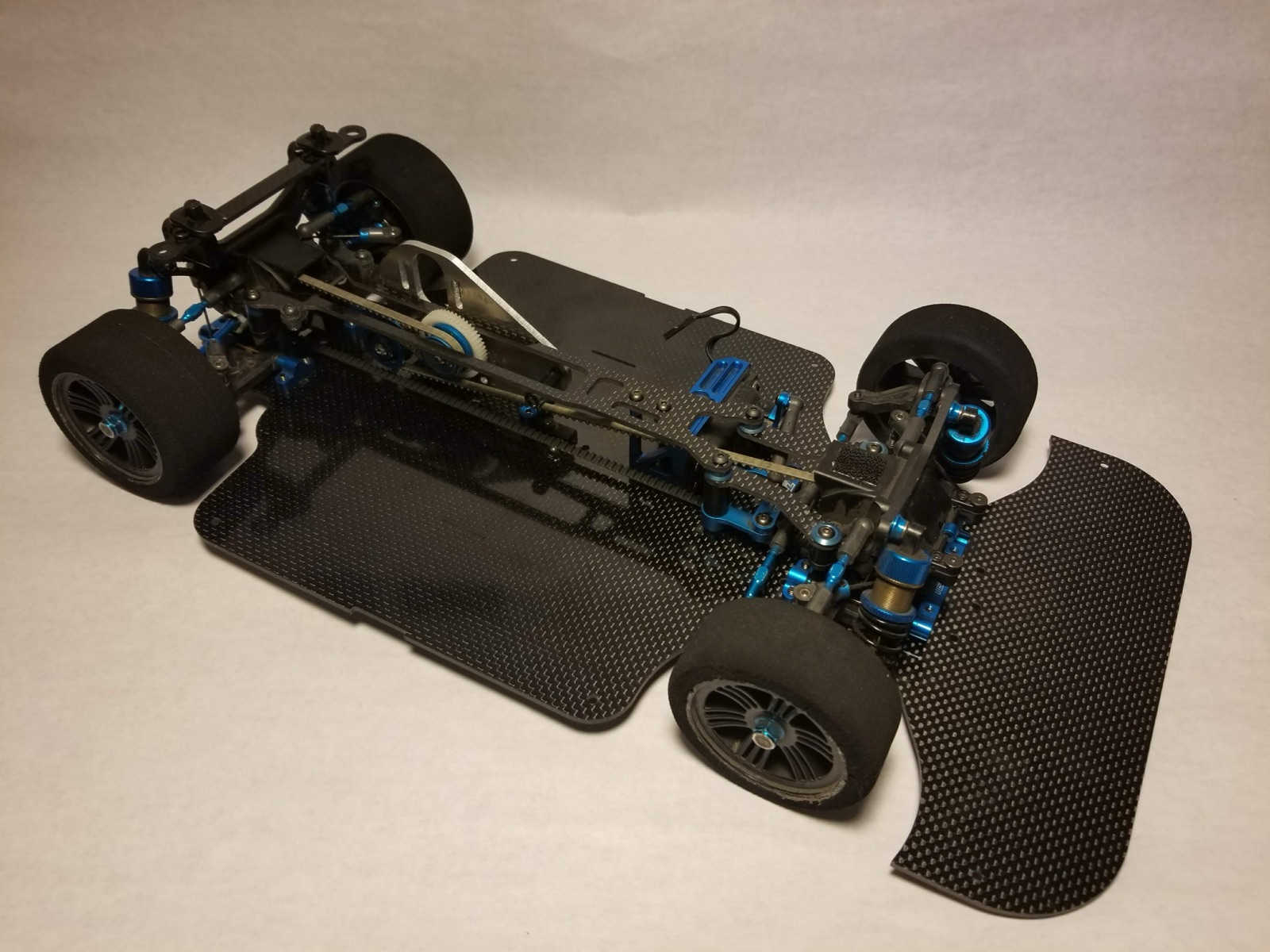
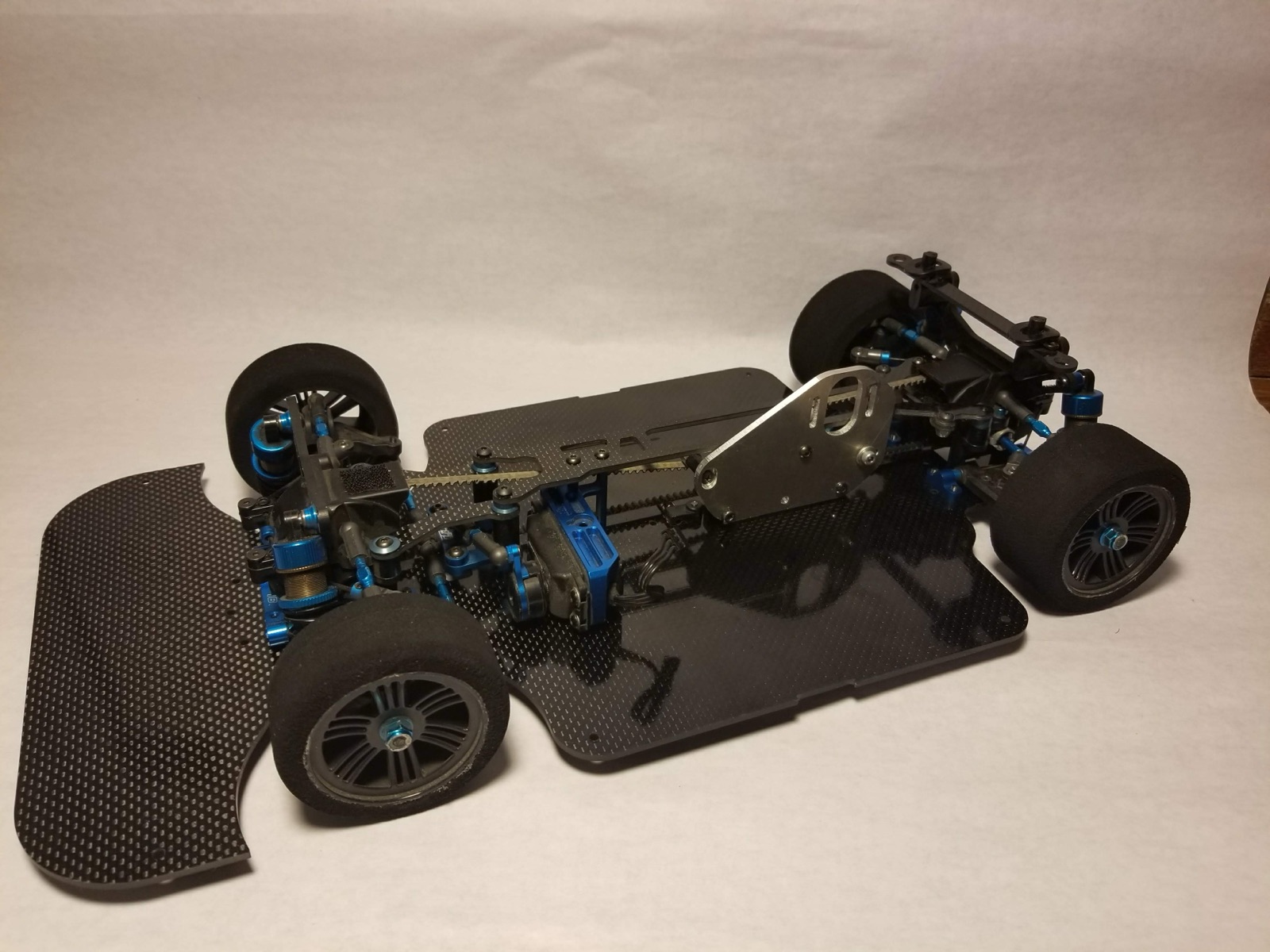
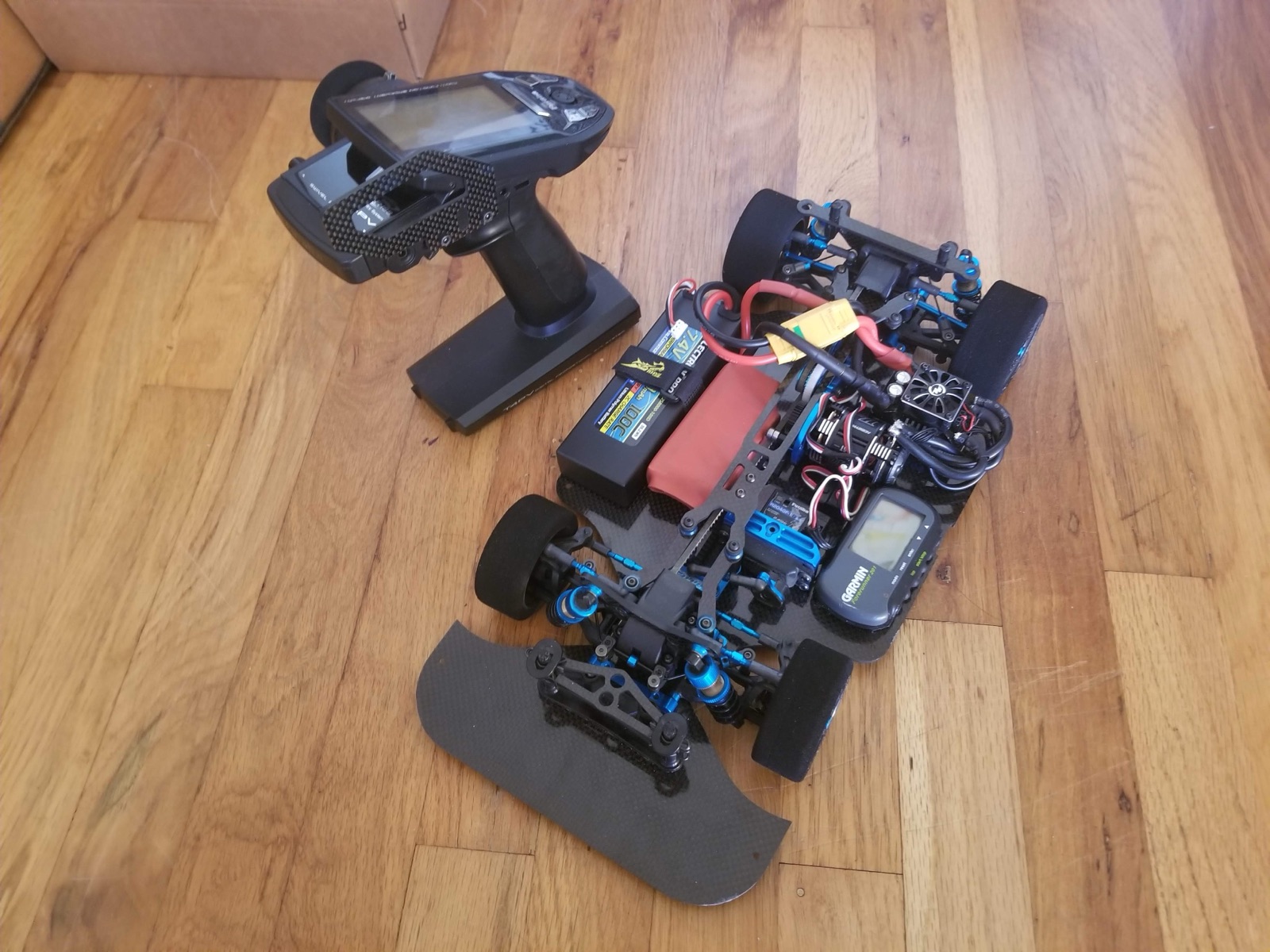
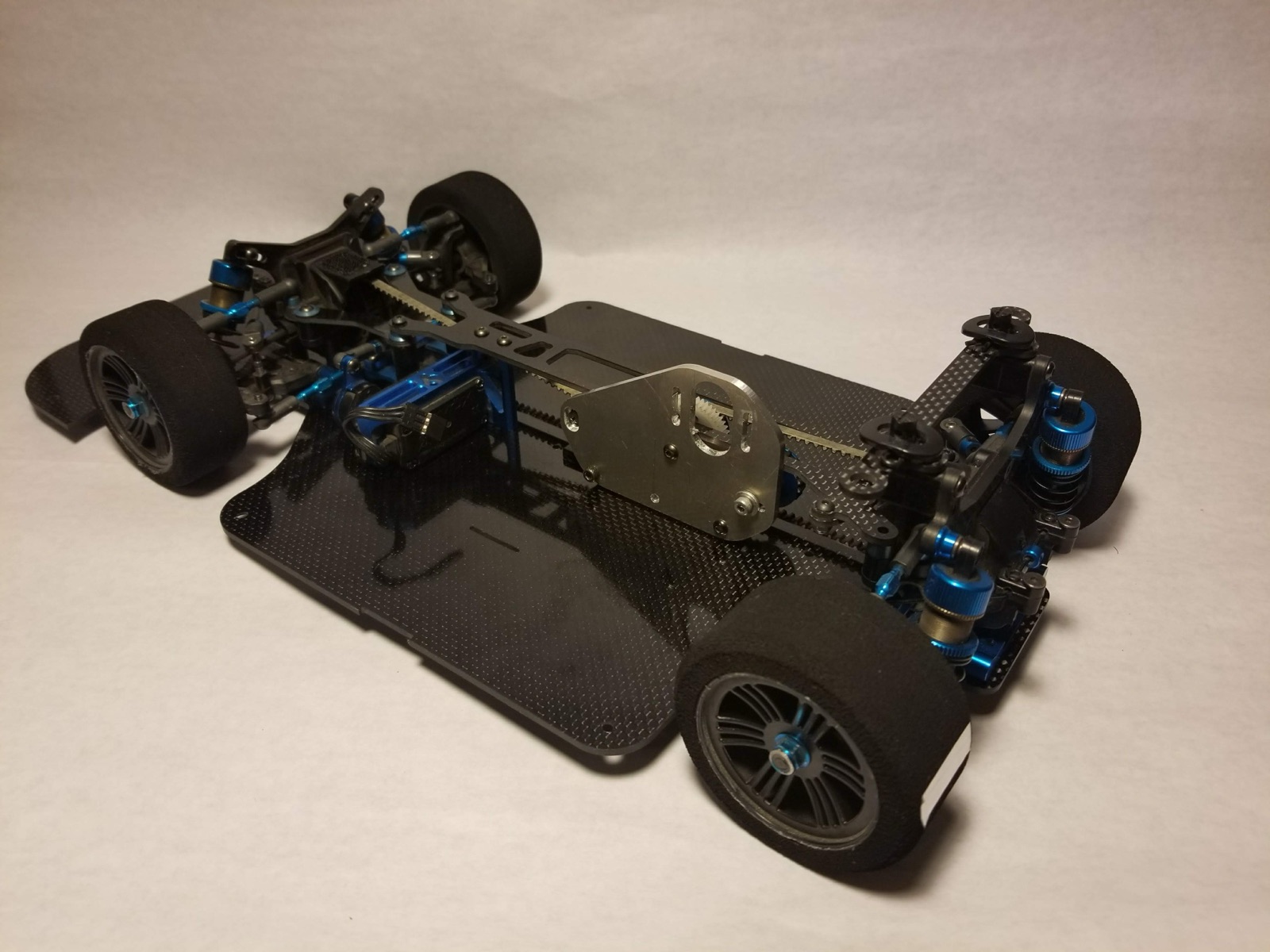
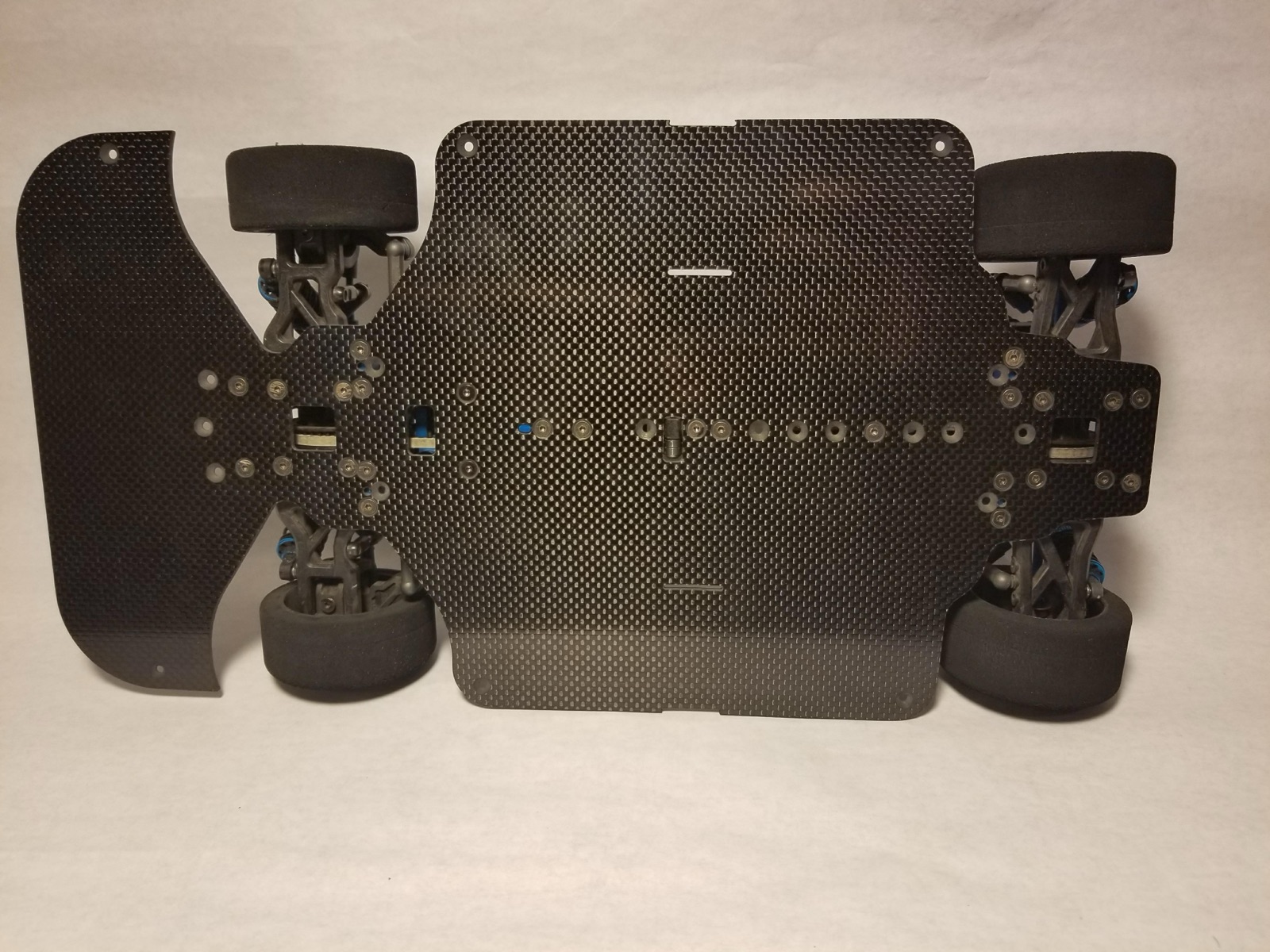
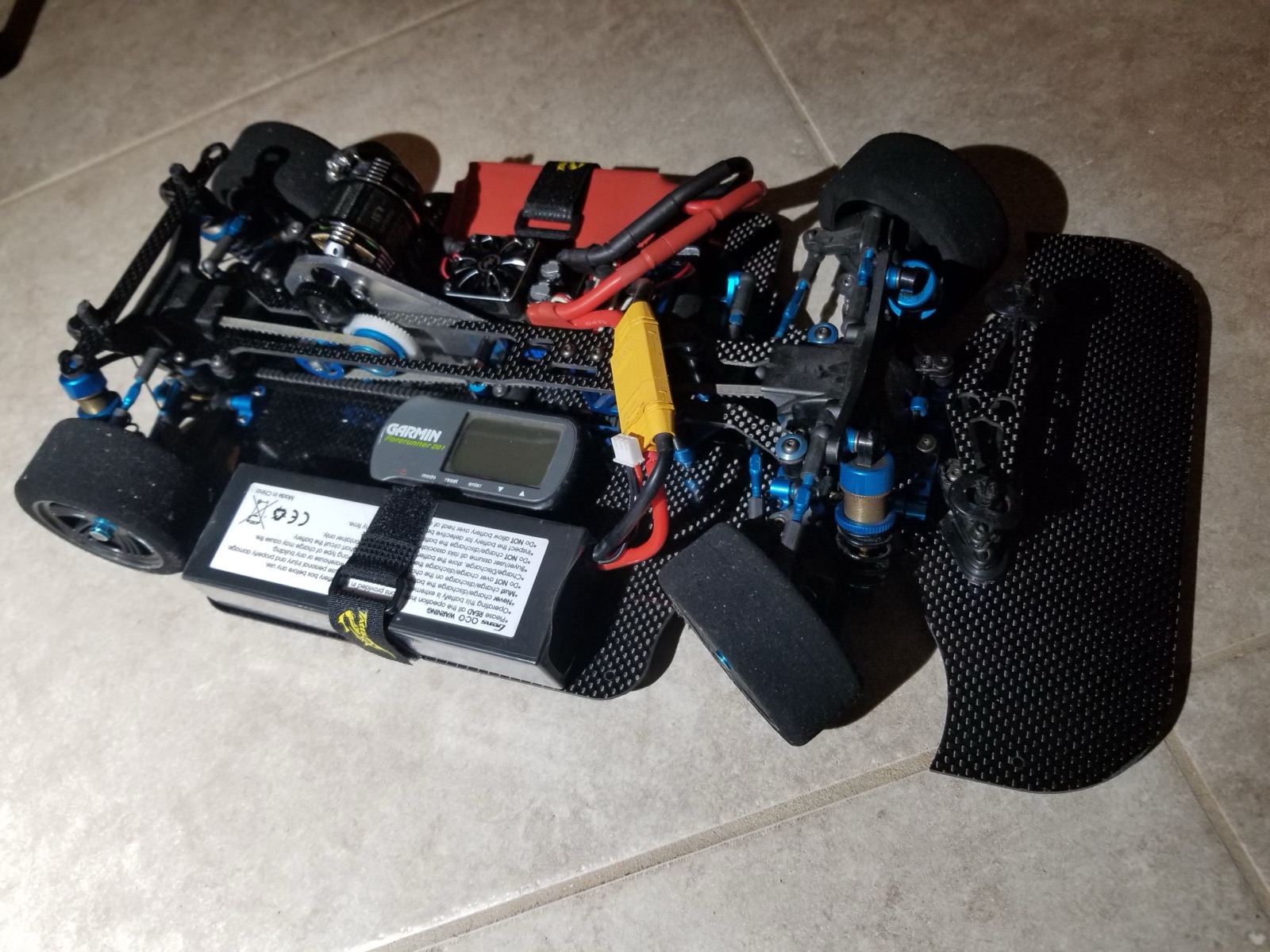
The speed run hasn't happened yet because of rain and the lack of a good place to run the car.